If someone searches "plumber near me", "solicitor in Birmingham" or "roofers in Leeds", Google often shows local businesses directly on Google Maps and within the local results.
For a local business, this can be one of the most valuable places to appear. The problem is that simply creating a Google Business Profile does not mean your business will automatically appear at the top of Google Maps.
If your business is missing completely, appearing for the wrong searches or sitting below competitors, there are several things you need to look at. So, how do you get your local business to show on Google Maps in the UK? You need to start with a verified and accurate Google Business Profile, but that is only the foundation. Your website, services, location, reviews and wider online presence all contribute to how Google understands your business.
At Avenor, we help UK businesses improve their visibility across Google Search and Maps by combining local SEO with wider search strategy. If customers are searching for your services but finding competitors instead, your Google Maps presence deserves a closer look.
1. Create or Claim Your Google Business Profile
The first step is making sure your business has a Google Business Profile. Google says businesses can use a Business Profile to manage how they appear on Google Search and Maps. You need to add or claim the profile and verify it before your business information can properly appear across Google's services. If you search for your business and discover an existing profile that you do not manage, claim it rather than creating another listing.
Duplicate profiles can create confusion and make managing your business information more difficult. Once you have access, check every part of the profile rather than treating verification as the finish line. Your business name, category, address or service area, phone number, website and opening hours should accurately represent the real business. Google specifically recommends keeping Business Profile information complete and accurate because this helps it understand what the business does and where it operates.
2. Choose the Right Primary Business Category
Your primary category matters because it helps Google understand what type of business you operate. A roofing company, for example, should not select a vague category simply because it contains a keyword it wants to rank for.
Google's guidance says businesses should choose the category that best represents what their main business does, and it specifically advises against using categories solely as keywords. This sounds simple, but getting the category wrong can create a mismatch between your business and the searches you want to appear for.
Think about what a potential customer would actually search when they need your service. If you are a solicitor, you want Google to understand that you are a legal business and then understand the specific services you provide through the rest of your profile and website. If you are a roofer, your profile and website should make the relationship between your business and roofing services clear. The category is one part of that picture, not a shortcut to rankings.
3. Make Your Business Information Completely Accurate
Your Google Business Profile should not be treated like an online business card that you fill in once and forget.
Make sure your:
Business name
Address or service area
Phone number
Website
Opening hours
Business category
Services
are accurate and up to date. Google says complete and accurate Business Profile information makes businesses more likely to appear in relevant local search results. If your business serves customers at their location rather than from a shop or office, make sure your service area is represented correctly. Google allows eligible businesses to specify service areas based on cities, postcodes or other areas they serve.
This is particularly important for trades and service businesses. A roofer in Leeds may travel across several nearby areas. A commercial cleaning company may serve businesses throughout West Yorkshire. A solicitor may operate from one office while serving clients across a much wider area. Your profile should reflect reality.
4. Add the Services You Actually Provide
Your Google Business Profile should make it easy for both potential customers and Google to understand what you actually offer. Don't try to turn the services section into a list of every possible keyword. Instead, focus on genuine services.
A roofer might have:
Roof repair
Roof replacement
Flat roof repair
Emergency roofing
A solicitor could have:
Family law
Divorce
Employment law
Commercial law
The exact services should reflect the business. Your website should then support those services with dedicated, useful pages where appropriate. This creates a stronger connection between your Google Business Profile and your website.
For example, if your business wants more roofing enquiries, our SEO for roofers approach focuses on building visibility around the actual roofing services potential customers search for rather than trying to rank one generic homepage for everything.
5. Get Genuine Google Reviews
Reviews are important for two reasons. They influence how potential customers perceive your business, and Google states that reviews and positive ratings can contribute to local prominence. But there is an important distinction. You need genuine reviews from real customers.
Do not buy reviews.
Do not create fake reviews.
Do not offer customers incentives in exchange for positive reviews.
Google's policies prohibit fake engagement and specifically state that reviews should reflect a genuine customer experience. Instead, make it easy for genuine customers to leave feedback after completing a job. You should also respond professionally to reviews, including negative ones. A profile with genuine customer experiences gives potential customers something much more valuable than another marketing claim from the business itself.
6. Add Real Photos and Keep Your Profile Useful
A local business profile should look like a real representation of the business. Add genuine photographs that help potential customers understand what you do. Depending on the business, this could include your premises, team, completed projects, vehicles, products, equipment or examples of your work. Google recommends adding photos and videos to Business Profiles to help customers understand the business.
For a roofing company, completed roofing projects can provide useful visual proof. For a restaurant, photographs of the premises and food can help customers decide where to visit. For a solicitor, professional photographs of the office and team can make the profile feel more credible. The important point is authenticity. Do not upload generic stock photographs and pretend they represent your business.
7. Optimise Your Website for Local Search Too
This is where many businesses make a mistake. They optimise their Google Business Profile but leave their website completely generic. Your website should reinforce what your Business Profile tells Google. If you serve Leeds, your website should clearly establish that you operate in Leeds. If you specialise in roof repairs, your website should clearly explain your roof repair service. If you are a family solicitor, your website should have useful information about family law and the services you actually provide.
This is why Google Maps SEO and traditional SEO should work together. Your Business Profile provides local business information, while your website gives Google much more context about your services, expertise and locations. Our SEO agency in Leeds approach, for example, combines location targeting with service and commercial search intent rather than treating "Leeds" as a word that simply needs to appear repeatedly on a page.
8. Build Dedicated Service and Location Pages
If you offer several services or operate across several locations, your website should make those relationships clear. Consider a business offering commercial cleaning across Manchester. A single page titled "Our Services" may not be enough. You may have separate pages for:
Commercial cleaning
Office cleaning
Hotel cleaning
Medical cleaning
and relevant location pages where there is genuine search demand. The same principle applies to professional services. A law firm might need dedicated pages for family law, employment law and conveyancing, supported by relevant location information. The objective is not to create hundreds of thin pages. It is to give users and search engines genuinely useful information about what you offer and where you offer it.
9. Build Local Authority Beyond Your Google Profile
Google does not rely exclusively on the information you enter into your Business Profile. Google explains that information about local businesses can come from multiple sources, including publicly available website content, third-party data, user contributions and other interactions with businesses. That means your wider online presence matters. Your website, relevant business directories, local mentions, industry websites, reviews and other legitimate references can help establish a clearer picture of your business. This is particularly important in competitive cities. If ten businesses all claim to provide the same service in the same area, Google has to determine which businesses are most relevant and prominent for a particular search.
That is why our local SEO services focus on the wider local search ecosystem rather than treating your Google Business Profile as a standalone marketing activity.
10. Understand How Google Maps Rankings Actually Work
There is no button that says "rank me first on Google Maps". Google says local results are mainly based on relevance, distance and prominence.
Relevance
How closely your business matches what the person is searching for. If somebody searches for "emergency roofer", Google needs to identify businesses that genuinely provide emergency roofing services.
Distance
How far the business is from the person searching or the location included in the search. This is why your Maps ranking can change depending on where the search is made.
Prominence
How well-known the business is. Google says prominence can be influenced by information such as links from other websites and reviews. This is why there is no legitimate trick that guarantees the number one position. A strong Google Maps strategy is about making your business more relevant, trustworthy and clearly understood within its market.
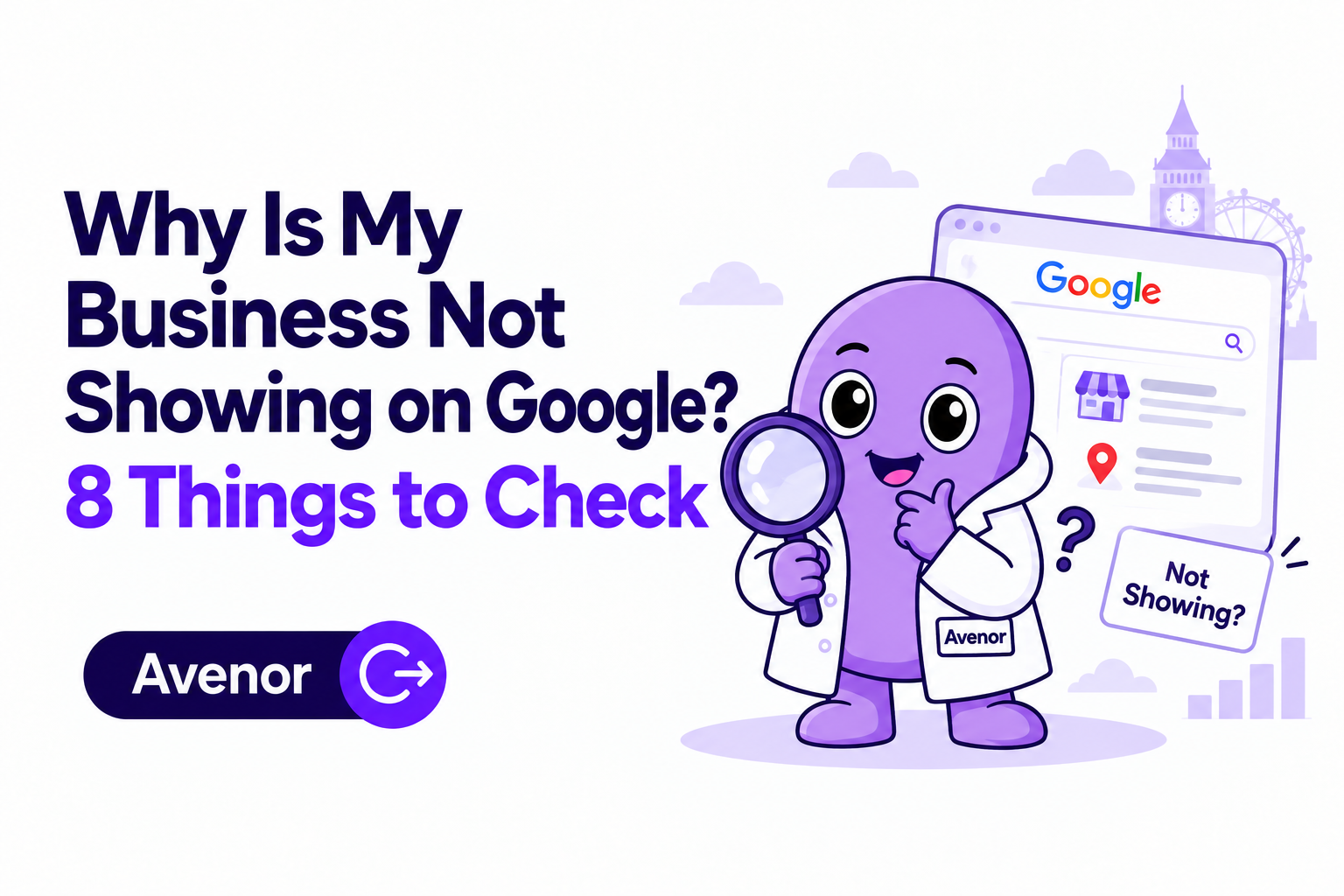
Why Isn't My Business Showing on Google Maps?
If you have completed your profile but still cannot find your business, don't immediately assume you have been penalised. First check whether the profile is verified. Google says only verified businesses can show their business information on Maps and Search.Then check your profile information, category, service area and website.
You should also search from different locations. A business might appear prominently for a customer close to its premises but much lower for somebody several miles away because distance is one of the factors Google considers. Google also notes that local search results can vary according to the specific search and location. If your business is technically visible but consistently below competitors, that is usually a local SEO and competitive positioning problem, not simply a profile creation problem.
How Long Does It Take to Appear on Google Maps?
There is no universal timeframe for reaching a particular position. Google says that rankings for new businesses can take up to a month to appear in search results, while edits to business information can take several days to appear. More importantly, appearing on Google Maps and ranking prominently on Google Maps are different things.
You might successfully create and verify your profile but still struggle to appear for valuable searches. That is where ongoing local SEO becomes important.
Google Maps Is Not Just About Rankings
There is another reason Google Maps matters. Potential customers can see your business information before they ever visit your website. They can see your:
Reviews
Opening hours
Phone number
Website
Location
Photos
and other business information directly within Google. Google's Business Profile performance reporting can also show verified business owners how people discover their profile through Search and Maps and what actions they take. That makes Google Maps more than an SEO position. It can become part of the entire customer journey.
Want More Customers to Find Your Business on Google Maps?
Getting listed on Google Maps is the starting point. Getting found for the right searches in the areas that matter to your business is the real objective. If you are a local service business competing against established companies, simply creating a Business Profile may not be enough. You need the profile, website, services, locations, reviews and wider online presence to work together. At Avenor, we help UK businesses build that wider search presence through SEO, local SEO, Google Ads and conversion optimisation.
If you are trying to rank in a competitive local market, you can explore our SEO agency in Birmingham, SEO agency in Nottingham and SEO agency in Southampton pages to see how we approach location-based search.
You can also see our SEO case studies for examples of search growth across service businesses. If you want to understand why your business is not appearing where your customers search, book an SEO audit and we can identify the gaps in your current local search presence.